


Freedom Isn't Free
Acceptance Mark
R. A. Mayes Company, Inc. Home Page Call Nationwide 1-800-742-9447

 
  Automated EMI & TEMPEST Receiver Systems  


Dynamic Sciences International - EMC, EMI Military, Surveillance and Tempest Receivers

Manufactured & Serviced in Woodlawn Hills, CA USA


DSII is a dynamic and innovative company specializing in the design and manufacture of sophisticated automated test and measurement systems. DSII's test and measurement systems are used by leading companies, governments and defense industries, to provide data security for classified and other secured data processing, computer and computer networks, modems, facsimile machines, etc. The products are suitable for testing wire and wireless data communication and processing systems, operating at frequencies of current high speed computers and microwave communication, such as K&X Band. HISTORY


 Automated Receiver Systems Index

Commercial EMI to 40 GHz

Military EMI

Surveillance

TEMPEST


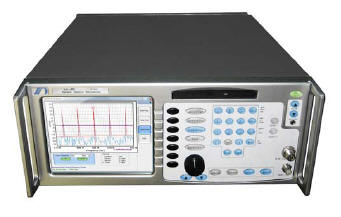
 EMI Test Measurement Receiver System

Back to Index

Picture

Model

Features


BROCHURE   DATA


Application Notes

      Cable Loss

      Frequency Tracking Measurements

      LISNs

      Pre-Amplification - Good or Bad?

      Third Order Intercept Point
      Tracking

DSI 600 Series


Model 600-02

20 Hz to 2.0 GHz


Model 600-04

20 Hz to 4.0 GHz


Model 600-12

20 Hz to 12.5 GHz


Model 600-27

20 Hz to 26.5 GHz


Model 600-40

20 Hz to 40 GHz


System includes the following:

CISPR, EN, ANSI, FCC Test Plan

Generator Software
MIL-461 Standard Software Test and

Auto Test Generator
Antenna Mast and Turntable Controller Software
Operators and Users Manual
One Year Warranty and Calibration

DSI-600 receiver is:

Fully Compliant with CISPR 16-1
Fully Compliant with MIL-STD 461E/462D

Compatible in the following

required test standards:

CISPR 25, Second Edition 2002-08
CISPR 12, Fourth Edition 1997-05

MIL-STD-461A-F

RTCA DO-160A-F

The DSI 600 EMI Test Measurement Receiver System is a step into the future of fully compliant test capabilities integrated into a powerful receiver technology coupled with the computational strength of the on board computer which facilitates high speed data acquisition, an enhanced spectral display module, and SCPI interoperability interface all complemented by DSII’s EMIT software. IF/RF spectrum analysis & time domain capabilities provide an all-in-one multi-functional resource rapidly and accurately providing consolidated concise test results and reports.


Frequency Ranges of Operation
… to 2, 4, 12.5, 26.5 & 40 GHz
Receiver Measurement Accuracy
… state-of-the-art receiver technology, very low NF, 10dB typ. Sensitivity

EMIT Test Suites
… fully compliant to CISPR 16-1,
FCC, ANSI, DO-160, EN, MIL-STD 461
Multiple detection modes
… peak, quasi peak, average, RMS
Powerful Embedded PC
… P3 processors to handle complex embedded algorithms
Display
… integrated 8.5” TFT color screen
GUI
… intuitive user-friendly interface
Interoperability
… standard SCPI compliant operation
Test Preparation / Report Generation
… powerful integrated test plan module annotated results files/graphs for export
AC & DC Powered


Model

Frequency Range

Noise Figure

600-02

20 Hz to 2 GHz

< 12 dB

600-04

20 Hz to 4 GHz

< 12 dB

600-12

20 Hz to 12.5 GHz

< 12 dB

600-27

20 Hz to 26.5 GHz

< 14 dB

600-40

20 Hz to 40 GHz

< 27 dB


  Specifications

RECEIVER


Measurement Precision:

+/- 2 db for SNR> 10 dB

Sensitivity

Typically 10dB above Johnson Noise

Receiver Frequency Range:

Model:

600-2    20 Hz to 2GHz

600-4    20 Hz to 4.0 GHz

600-12  20 Hz to 12.5 GHz

600-27  20 Hz to 26.5 GHz

600-40  20 Hz to 40 GHz

Auto Ranging

Attenuator and programmable gain

RF Section


Attenuation:

0-70 dB in 6 dB steps

IF Frequencies:

1450 MHz, 550 MHz, 21.4 MHz

IF Bandwidths:

13 bandwidths from 10Hz to 1Mhz


Hz

Hz

kHz

kHz

kHz

MHz

10

100

1

10

100

1

20

200

3

30

120


50

500

9


Noise Figure

<12dB 20Hz to 20 kHz

<9dB 20Hz to 600MHz

<12dB 600MHz to 12.8 GHz

<14dB 12GHz to 27GHz

<27dB 27GHz to 40GHz

Detectors

Peak, Quasi Peak, Average, RMS

IF Impulse Response

Overshoot less then 2% for BW <

RF Connector:

Type N, 50 Ohms

IF Center Frequency

21.4 MHz

Input Characteristics

VSWR: Better then 2:1

Impedance: 50 Ohms nominal

Max RF Input: 1 watt average CW

LO Leakage: Less then –90 dBm

3rd order intercept

O dBm

Spur Free Dynamic Range

Better than 60 dB

Residual Responses (Terminated Input)

Less then –120 dBm

IF Output level

At least 10dBm into 50Ohms

Band Selection

Automatic

IF Shape Factors:

Better than 4:1 (60 to 6dB)

Band Frequency Ranges:

Band: 1

Band: 2

Band: 3

Band: 4

Band: 5

Band: 6


20Hz To 150 kHz

150 kHz to15 MHz

15 MHz to 1 GHz

1 GHz to 2 GHz

2 GHz to 27GHz

27GHz to 40GHz

Tuning Resolution

0.1Hz

Receiver Frequency Stability and Accuracy

1 ppm after 30 minutes

Video/Audio


Video Log Dynamic Range

At Least 70dB

Video Outputs

4 volts max (50 Ohms)

Video Bandwidth

Not less then bandwidth

Audio

>1 Vms (8 Ohms), flat 20Hz –250kHz

Power


AC:

Line Voltage:

Power Disipatation:

Frequency:

DC: nvironmental / Mechanical


117/230 VAC + 15%

120 Watts

50/60/400 Hz

24 VDC


Weight: 40 Lbs

Cooling: Built in low velocity fan

Mounting: Rack mount


Temperature Range: +10C to 40C

Storage conditions: -20C to +50C

Humidity Range: 0 o/o to 80 o/o


 Automated Commercial EMI Test Measurement System

Back to Index

Picture

Model

Features

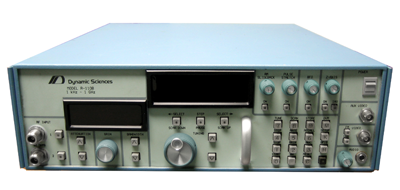
DSI-2020 Automated Commercial EMI Receiver Test Measurement System

DSI-2020 System


1 kHz to 2.0 GHz


DATA

Flexible: Precision sweeps and measurements for compliance tests, spectrum analyzer displays for pre-compliance 
Powerful: 1 kHz to 2.0 Ghz frequency range, low noise floor, wide dynamic range, concurrent Peak, Q-peak, Average and RMS measurements 
Productive: Preprogrammed tests for all EN and FCC requirements, user created tests and test sequences, selectable report formats, programmable Turntable and Mast positioning 
User Friendly: Windows environment, direct test selection, easily generated custom tests, simple transducer table entry 
Reliable: Hardware design proven with hundreds of units in field, software developed from years of experience with automated testing 
Compact, light weight: May be combined with notebook, portable or desktop computer

SPECIFICATIONS


SYSTEM


Measurement Precision: 

+/- 2 db for SNR> 10 dB

Detection Modes: 

Simultaneous operation with continuous graphical displays


Peak,  Quasi peak,  RMS,  Average

RECEIVER 


Frequency Range:

1 kHz to 2.0 GHz

Maximum signal level: 

0.5 watt

IF and Image Rejection:  

At least 80 dB 

Spur-free Dynamic Range:

Better than 60 dB

Frequency Stability:

1 ppm per year 

Auto-Ranging: 

Attenuator and programmable gain

Input Attenuator: 

0-70 dB in 10 dB steps

IF Frequencies:

1450 MHz, 550 MHz, 21.4 MHz

IF Bandwidths: 

9 bandwidths from 100 Hz to 120 kHz  


Hz

kHz

kHz

kHz

mHz

100

1

10

120

1

200

3

30


300

9


IF Shape Factors:

Better than 4:1 

Impulse Overshoot:  

100 Hz to 30 kHz, +/- 2%; 120 kHz +/- 10% 

RF Connector:

Type N, 50 Ohms

I/0: 

IEEE-488.2/IEC bus

Power:

100 watts, 115/240 VAC +/- 10%, 50-60 Hz

Weight: 

40 lbs. (18 kg) 

Cooling: 

Built-in low velocity fan 

Mounting: 

Rack mount kit available

CONNECTORS AND CONTROLS  


Front Panel:

RF Input, type N  

Rear Panel: 

Video, BNC, AC power, IEEE-488.2, line voltage switch 

Computer Optional


 Automated Emissions & Surveillance System

Back to Index

Picture

Model

Features

DSI-110 System


1 kHz to 1.0 GHz

extendable to

 100 Hz and 18 GHz

 with converters


DATA

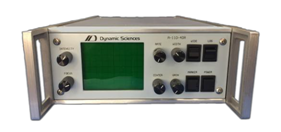
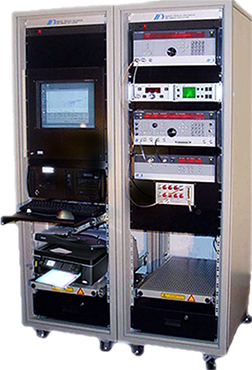
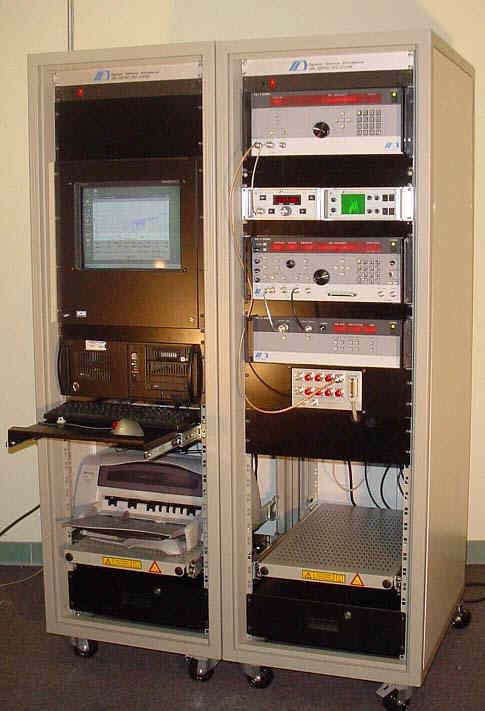
The DSI-110 integrates either the R-110 or R-110B Receiver with a sophisticated data acquisition and measurement software package and off-the-shelf computer hardware to yield a powerful and versatile RF measurement and reporting system. 
The DSI-110 is ideally suited to a wide variety of signal measurement tasks in either laboratory or field environments, including EMI/EMC testing, RF instrumentation, spectrum surveillance, and remote signal monitoring. 
The R-110 and R-110B receivers cover a wide frequency range (1 kHz to 1 GHz), permitting LF through UHF detection with a single receiver. Both receivers feature excellent noise figure and dynamic range characteristics, spur-free operation, and a large number of bandwidths to facilitate signal capture in the presence of high ambient noise. 
The system software operates in the Windows 3.1x environment; it is exceptionally flexible and easy to learn and use. The software is mature and is compatible with fixed and removable-cartridge disk drives, printers, plotters, and other peripherals. Various ancillary software routines are available which tailor the system to particular applications, such as frequency management and spectrum surveillance. 
The R-110 and R-110B receivers are designed to facilitate expansion, and both accept plug-in modules to enhance their inherent capabilities. The R-110B is fully augmented with wide-bandwidths, FM demodulator, pulse-stretch and slideback, DVM display, and bandwidths in a 1:2:5 sequence. Ancillary units provide panoramic display, frequency extension to 100 Hz and 18 GHz, and calibration with impulse and comb generators.

SPECIFICATIONS


SYSTEM


Measurement Precision:

For SNR > 10 dB, 4 dB (uncalibrated), 2 dB with calibration sources

Sensitivity: 

Typically 10 dB above Johnson noise

Sweep Speed: 

60 steps per second (typ)

Self-test: 

Comprehensive start-up and pre-measurement checks

Documentation Preparation:

Word processor with graphics capture for annotation of recorded data 

RECEIVER 


Noise Figure: 

Less than 13 dB (10 dB typical in midrange) 

IF and Image Rejection: 

At least 80 dB 

Spur-free Dyn. Range: 

Better than 60 dB 

Frequency Stability: 

1 ppm per year 

Autoranging: 

Selectable; uses 70 dB step attenuator and receiver gain 

Frequency Range: 

1 kHz to 1 GHz (100 Hz with LFE Option, 18 GHz with microwave downconverter) 

Input Attenuator:

 0-70 dB for 10 dB steps

IF Bandwidths: 

R-110: 26 selectable BW from 200 Hz to 15 MHz


(wide bandwidths to 200 MHz optional) 


R-11OB: 33 BW from 200 Hz to 200 MHz


1:2:5 sequence (50 and 100 Hz with LFE) 

DVM: 

Peak-hold: 


100 MHz BW, 12 bit A/D-1 4-digit DVM display (R-110B) 

IF Outputs:

1450 MHz, 21.4 MHz 

Video Outputs: 

AM Linear/Log, Z-axis; R-110B: Aux video with pulse stretch and slideback, FM video 

Audio: 

>1 Vrms; +3 dB, 20 Hz - 20 kHz 

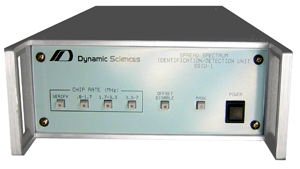
SSIU1

Spread Spectrum Identification/Detection Unit


DATA

SSIU-1 Spread Spectrum Identification/Detection Unit works in conjunction with the R-110B Wide Range Receiver to detect and characterize a variety of spread spectrum and digital communication emanations at negative received signal-to-noise ratios. The SSIU-1 utilizes a proprietary analog signal processor to perform the detection function, and the outputs of the unit may be displayed with any RF spectrum analyzer.


 Automated TEMPEST & EMI Test System

Back to Index

Picture

Model

Features


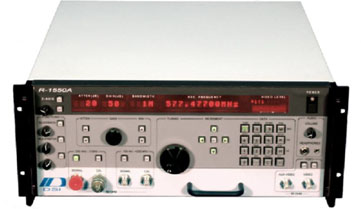
DSI-1550A System


10 Hz to 1.0 GHz

extendable to

 40 GHz

 with converters


DATA

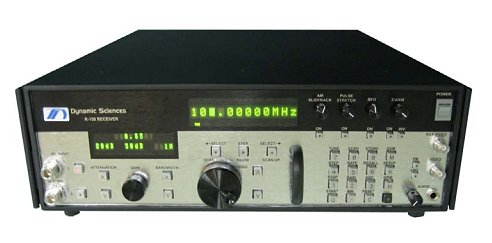
The DSI-1550A is a PC based automated receiving system that permits precision measurement, test and analysis associated with surveillance, TEMPEST or EMI/EMC. Complete manual and automatic receiver operation is provided, and user friendly software allows straightforward access to and control of a suite of sophisticated data reduction algorithms and displays. In addition to the standard DSI-1550 configuration, Dynamic Sciences offers an extensive library of software and hardware accessories that will allow tailoring of a system to specific applications.


Sales Restricted to

 NATO Countries Only

SPECIFICATIONS


FREQUENCY CHARACTERISTICS:

Frequency Range

10 Hz to 1 GHz (40 GHz with optional down-converter)

Frequency Resolution

0.1 Hz (1 MHz for Bandwidths 20 MHz or greater)

IF FILTERS:

Digital Filters

1 Hz to 500 Hz in a 1-2-5 sequence


Skirt Selectivity

<4:1 (60 dB to 6 dB)

Analog Filters,Linear Phase

200, 250, 300, 400, 500, 640, 800 Hz 1, 1.3, 1.6, 2, 2.5, 3, 4, 5, 6.4, 10, 13, 16, 20 kHz


Skirt Selectivity

<3:1 (60 dB to 6 dB)


Impulsive Response

<12% Overshoot

Analog Filters,12 dB Gaussian

50 Hz, 100 Hz, 50 kHz to 200 MHz in a 1-2-5 Sequence


Skirt Selectivity

<4:1 (60 dB to 6 dB)


Impulsive Response

<12% Overshoot

DETECTOR:

Demodulation Modes

AM, FM, CW, (BFO), Log-AM


Outputs

Separate A