|
Pilkington DataStop glasses can be used in a wide variety of
applications where protection from electronic interference
is needed.
Typical
installations include :
-
Fully
screened buildings, individual floors in a building or
individual rooms in a building
-
Electronic Instrument Panels
-
Hospital Operating Rooms
-
Embassy Glass
-
Recording Studios
-
Airport Control Towers
-
Shielded Cabinets
-
Monitor Screens
-
MRI
View Windows
Office
Partitions
-
Instrument Displays
-
Computer Rooms
-
House Windows
-
SCIF's
For internal
rooms, cubicles or partitions the laminated (TL) versions
are recommended while for external glazing, the sealed unit
(TD) versions should be used.
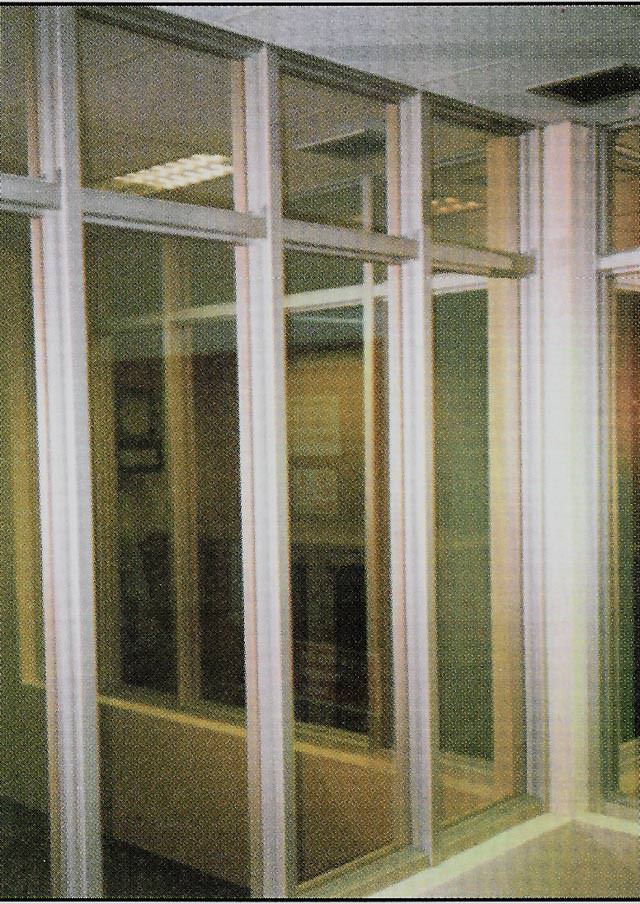
When offices
are being refurbished for EMI control purposes, the window
can be replaced or alternatively a single piece secondary
sash can be installed using laminated or double glazed DATASTOP.
For new
office complexes incorporating computer facilities and
terminals, the complete glass curtain wall can now be
screened using DATASTOP glass.
The advantage of
discussing such screening methods at the design stage cannot
be overstressed, since there is the option for screening the
complete building envelope incorporating excellent solar
control and thermal insulation as necessary.
|
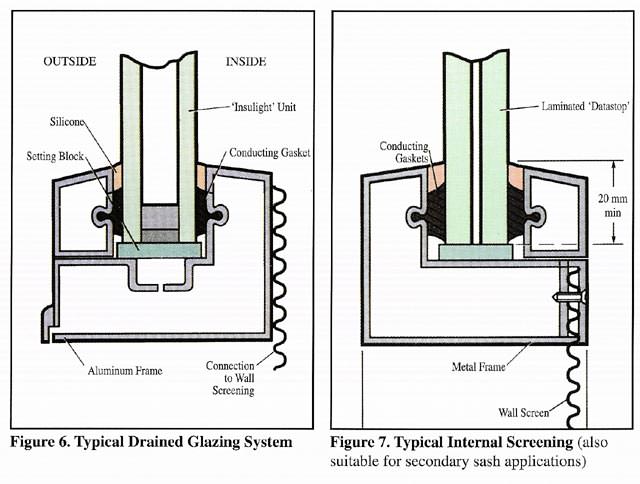
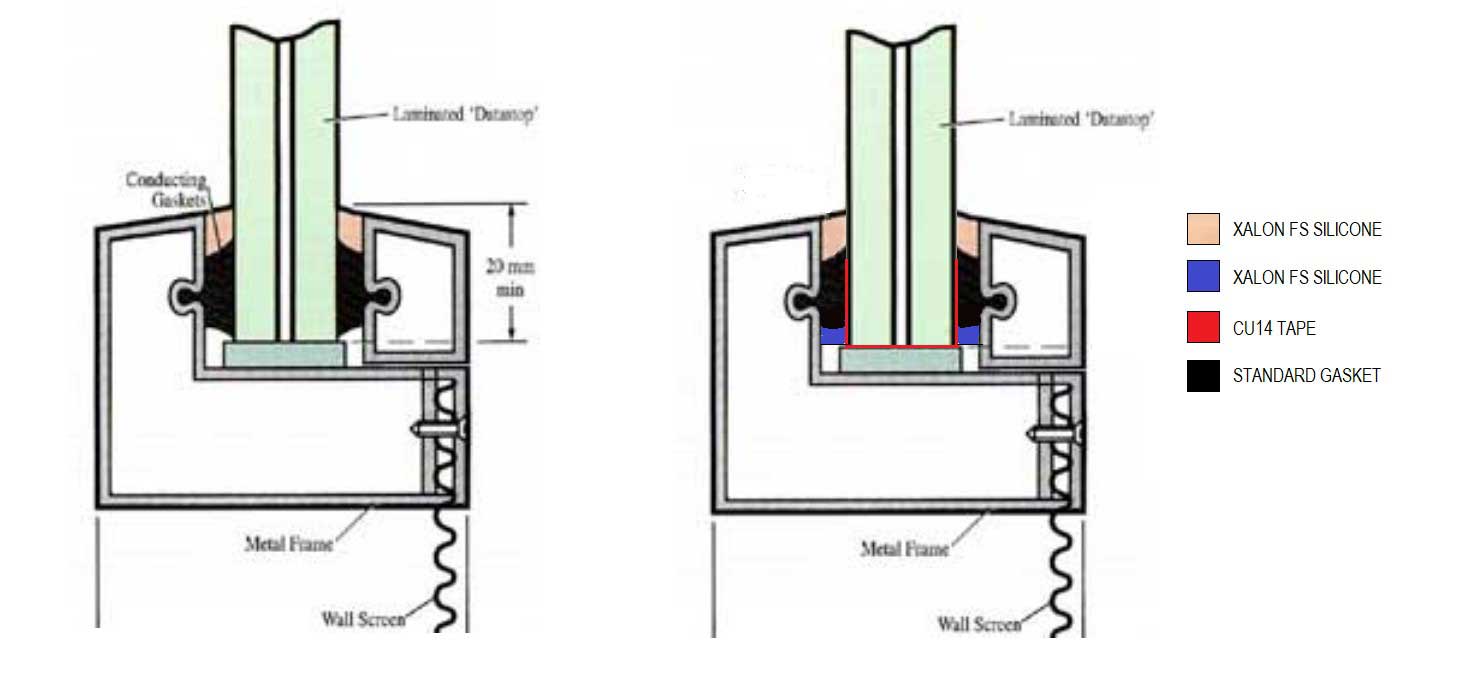
In order
to maximize the screening effect of the whole building it is
essential that the total periphery of the glass is
electronically connected to the metal window frame which in
turn should be connected to the screening material in the
wall.
After
installation an initial "audit" is recommended to measure
the attenuation of the total screening. This should be
repeated periodically.
DataStop glass carries a 10 year warranty and requires
no maintenance beyond that required for any conventional
glass.
As with
all double glazing units, "Datastop" units for external
glazing should be installed in accordance with good
practice, and following the recommendations in the leaflet "Insulight"
double glazing units - Installation and Maintenance.
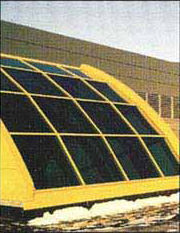
Skylights
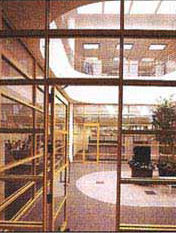
RF Shielded Glass Walls
|